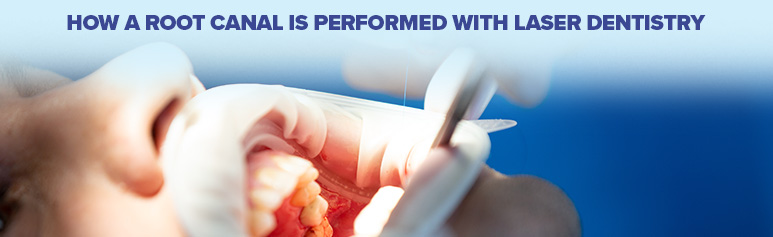
How a Root Canal Is Performed With Laser Dentistry

FACT CHECKED
You know root canal treatment is needed. You’ve come across the laser version and want to understand what the laser actually does in the procedure, whether it changes the experience, and whether the extra cost is justified.
Here’s the direct answer. Laser root canal treatment in Chennai uses laser energy at one specific stage: disinfection. The laser does not clean or shape the canals. Rotary instruments do that. The laser is applied after mechanical cleaning to reduce residual bacteria in areas instruments may not fully reach.
Understanding this tells you what to expect and whether your case warrants the laser option. At Radiant Dental Care, laser-assisted root canal treatment is offered where clinically indicated, after OPG imaging confirms it adds value to your case.
What Standard Root Canal Treatment Involves?
Root canal treatment removes infected pulp from inside the tooth. The pulp is the soft tissue containing nerves and blood vessels that runs through the root canals inside each tooth root.
When infection spreads through the canals, it can reach the surrounding bone. Treatment involves three core steps:
- Removing the infected pulp tissue from the crown and root canals
- Cleaning and shaping the canals using rotary instruments, which are electrically driven files that work more precisely than manual tools
- Sealing the canals with gutta-percha, a biocompatible material that fills the canal space and prevents reinfection
Disinfection at every stage matters because residual bacteria inside the canal are the most common reason a root canal fails or needs retreatment. This is the specific problem laser-assisted RCT is designed to address.
What Laser-Assisted Root Canal Treatment Actually Does?
The laser is not the primary tool in a root canal. It is used at one specific point in the procedure. Understanding this is the difference between knowing what you’re paying for and accepting an upgrade that may not change your outcome.
Where the Laser Is Used?
After rotary instruments have cleaned and shaped the canals, residual bacteria can remain in areas the instruments cannot fully access. These include narrow side branches off the main canal and microscopic spaces in the canal walls called dentinal tubules.
Laser-assisted disinfection directs laser energy inside the prepared canal to reduce this remaining bacterial load. It does not remove tissue. It does not reshape the canal. It targets bacteria that mechanical cleaning may leave behind, and it does this most effectively in heavily infected or anatomically complex cases.
What the Laser Does Not Do?
This part is equally important to understand before agreeing to the procedure.
- The laser does not clean or shape the canal, rotary instruments are still required for that
- It does not remove the need for local anaesthesia in most cases
- It does not automatically make every root canal a single-sitting procedure
- It is not clinically necessary for every infected tooth
Laser-assisted RCT is a disinfection upgrade at one procedural step. It is not a fundamentally different treatment. Any description that positions it as a complete replacement for conventional RCT is clinically inaccurate.
Is Laser RCT Meaningfully Better Than Conventional RCT?
For some cases, yes. For straightforward infections with accessible canal anatomy, conventional RCT with rotary instruments and thorough irrigation delivers comparable outcomes. The honest answer depends entirely on the clinical picture.
When Laser Has a Genuine Advantage?
The laser adds real clinical value when mechanical cleaning alone is unlikely to reach all bacteria present.
Heavily infected canals where residual bacterial load remains high after thorough cleaning are the clearest indication. Complex or narrow canal anatomy, where side branches are difficult to access with instruments, is another. Retreatment cases, where a previous root canal has failed and enhanced disinfection may reduce the chance of recurrence, are a third situation where laser-assisted RCT may be the more appropriate choice.
When Conventional RCT Is Equally Appropriate?
For many patients, conventional RCT with rotary instruments is the clinically and financially sound decision.
- Single-canal front teeth with manageable infection
- Cases where canal anatomy is accessible and thorough irrigation with antibacterial solutions is sufficient
- Patients for whom cost is a priority, since conventional RCT with proper sealing delivers reliable long-term results
Your dentist’s assessment of canal complexity and infection severity is the only reliable basis for this decision. Suitability is determined by the X-ray and clinical examination, not by patient preference or assumption.
Step-by-Step: How Laser Root Canal Treatment in Chennai Is Performed?
The procedure follows the same foundational steps as conventional RCT. Laser disinfection is added at step 6, after mechanical cleaning is complete.
- OPG X-ray and clinical examination to assess canal count, anatomy, infection depth, and root condition
- Local anaesthesia applied to keep you comfortable throughout
- Access opening made in the tooth crown to reach the root canals
- Rotary instruments used to clean and shape each canal and remove infected pulp tissue
- Irrigation with antibacterial solutions to flush debris and reduce bacterial load
- Laser directed inside the canals to reduce residual bacteria in canal branches and dentinal tubules
- Canals dried and sealed with gutta-percha to fill the canal space completely
- Crown or filling placed over the tooth to restore it and protect it from fracture under chewing load
The laser step is step 6. Everything before it is standard mechanical root canal treatment. The laser does not shorten or replace any of the steps that precede it.
Root Canal Treatment Cost in Chennai: What Laser Adds to the Price?
Laser-assisted RCT costs more than conventional RCT because it involves additional technology and an extra procedural step. Here are the approximate Chennai market ranges for 2026.
| Procedure | Approximate Cost in Chennai |
|---|---|
| Conventional RCT – Front Tooth | ₹3,000 – ₹8,000 |
| Conventional RCT – Molar | ₹5,000 – ₹12,000 |
| Laser-Assisted RCT | ₹8,000 – ₹18,000 |
| RCT with Crown (any type) | ₹12,000 – ₹25,000 |
These are market estimates. Root canal treatment cost in Chennai varies by tooth type, infection complexity, number of visits, and crown material. A confirmed quote requires clinical examination and OPG imaging.
Patients researching root canal treatment low cost in Chennai should confirm what the quoted price includes before agreeing to any procedure. Some clinics quote the procedure fee alone. X-ray, irrigation materials, post-treatment review, and crown are sometimes charged separately. A lower headline figure that excludes these components can end up costing more in total than a complete package quote.
At Radiant Dental Care, a written cost estimate covering all treatment components is provided after clinical assessment, before any procedure begins.
Book Your Root Canal Consultation at Radiant Dental Care
Radiant Dental Care offers root canal treatment across clinics using rotary instruments as standard, with laser-assisted disinfection available where clinically indicated after OPG assessment. For patients comparing options for the best root canal treatment in Chennai, here is what every Radiant Dental Care clinic provides:
- Root canal treatment with rotary instruments as the clinical standard
- Laser-assisted disinfection for cases where it adds clinical value after assessment
- OPG imaging before every root canal case
- Single-sitting RCT in suitable cases
- Class B autoclave-sterilised instruments at every location
- Written cost estimate before treatment begins, with no surprise additions at billing
- Warranty-backed root canal treatment in eligible cases
- Conscious sedation for patients with dental anxiety
For patients who want to understand what happens after the procedure, the root canal aftercare guide covers what to do and what to avoid during recovery.
For complex cases needing advanced canal cleaning, Radiant Dental Care also offers endosonic root canal treatment where clinically indicated.
Radiant Dental Care is open 365 days, 10 AM to 9 PM, across Adyar, Tambaram East, Chromepet, Nanganallur, Medavakkam, Navalur OMR, Siruseri OMR, Perungudi OMR, Guduvanchery, and Thiruporur.
Book your root canal consultation at Radiant Dental Care
Call: +91 9513446186
Frequently Asked Questions
What Does the Laser Actually Do in Root Canal Treatment?
The laser reduces residual bacteria inside the canal after mechanical cleaning. It targets areas rotary instruments may not fully reach. It does not clean or shape the canal itself.
Is Laser Root Canal Treatment Painful?
Local anaesthesia is used throughout, so there is no pain during the procedure. Mild soreness for one to two days afterward is normal with both laser and conventional RCT.
Does Laser RCT Always Require Fewer Visits?
No. The number of visits depends on infection severity and canal complexity, not the technique. Single-sitting RCT is possible with both methods in suitable cases.
What Is the Root Canal Treatment Cost in Chennai for Laser vs Conventional?
Laser-assisted RCT costs approximately ₹8,000 to ₹18,000 in Chennai. Conventional RCT starts from ₹3,000 for front teeth and ₹5,000 for molars. Root canal treatment cost in Chennai varies by tooth type and case complexity.
Is Laser Root Canal Treatment Suitable for Every Patient?
No. Clinical assessment and OPG imaging determine suitability. For straightforward infections, conventional RCT delivers reliable outcomes. Laser adds clear clinical value in heavily infected or complex canal cases.
Does Radiant Dental Care Offer Laser Root Canal Treatment in Chennai?
Yes. Laser root canal treatment in Chennai is available across all 10 Radiant Dental Care clinics where clinically indicated. Every case begins with OPG imaging to confirm the right approach before treatment is agreed.
Categories:
- Braces
- Cavity
- Crossbite
- Dental Bridge
- dental care
- Dental Clinic
- Dental Crown
- dental health
- dental hospital
- Dental Implants
- Franchise
- Home dentist
- invisalign
- Mamelons
- News
- pediatric dentist
- Root Canal Treatment
- Smile Makeover
- Teeth Aligners
- teeth alignment
- teeth cleaning
- teeth whitening treatment
- tooth extraction
- Tooth Hypersensitivity
- Uncategorized
Trending Posts
 +91 9513446186