Do’s and Don’ts of Root Canal Aftercare

FACT CHECKED
You’ve just had root canal treatment cost in chennai, or you’re about to. Either way, you want to know what happens next and what you need to do to make sure it heals properly.
Here’s the short answer: mild soreness for two to three days is completely normal. How you look after the tooth in the first week directly affects how well it heals and how long the treatment lasts.
This guide is written by our clinical content team at Radiant Dental Care and reviewed by Dr Sreenayana Sinha Roy, MDS, our Senior Dental Clinician with 20+ years of dental practice and expertise in endodontics across our 10 Chennai clinics. Here’s exactly what to do, what to avoid, what to eat, and the specific signs that mean you need to call us.
What to Expect After Root Canal Treatment?
Mild soreness and sensitivity for two to three days after root canal treatment is normal. The tooth and surrounding gum may feel tender, especially when you bite down. This is tissue healing, not a sign that something went wrong.
Root canal treatment removes the pulp, the soft tissue inside the tooth containing nerves and blood vessels, to clear infection and save the tooth structure. Once the pulp is removed, the surrounding tissue needs time to settle. Some swelling around the gum in the first 24 to 48 hours is expected.
- The key thing to watch: discomfort should reduce each day, not increase. If it’s getting better, you’re healing normally. If it’s getting worse after day three, that needs attention.
- One thing most patients notice after the procedure: the discomfort is almost always less than the toothache that brought them in.
What You Should Do After Root Canal Treatment?
Follow these steps from the day of your procedure:
- Take your prescribed medication on time. Antibiotics prevent infection. Pain relievers manage discomfort. Don’t wait until pain builds before taking them. Take them as directed, even if you feel fine.
- Keep the area clean. Brush gently twice daily. Don’t avoid the treated tooth entirely. Keeping it clean prevents secondary infection from building up around the temporary filling.
- Rinse with warm salt water from day two. Twice daily after meals. It reduces gum inflammation and keeps the area clean without irritating the healing tissue.
- Eat soft foods for the first few days. The tooth doesn’t have its permanent crown yet. It’s more fragile than it looks. Soft foods protect it until the crown is placed.
- Attend your crown appointment. Root canal treatment without a crown leaves the tooth open to fracture, especially back teeth. The crown isn’t optional. It’s the final step that completes the treatment.
- Rest on the day of the procedure. Avoid strenuous exercise for at least 24 hours.
What You Should Avoid After Root Canal Treatment?
These are the things that most commonly cause problems during recovery:
- Don’t chew on the treated side. Until your permanent crown is placed, the tooth is structurally weaker than a healthy tooth. Chewing on it risks cracking it.
- Don’t eat hard, sticky, or crunchy foods. Nuts, hard biscuits, chewy sweets, and raw carrots can all damage a tooth that’s had significant infection or cavity work.
- Don’t smoke for at least 48 hours. Smoking delays healing and increases the risk of infection in the treated area.
- Don’t skip the follow-up appointment. A temporary filling is exactly that. Missing the crown appointment is one of the most common reasons root canal treatment fails over time.
- Don’t ignore pain that’s getting worse. Mild soreness is expected. Increasing pain after day three is not. Call your dentist the same day, not next week.
- Don’t probe the area with your tongue or finger. It introduces bacteria and disrupts the temporary filling.
Is the Pain After Root Canal Normal? When Should You Call Your Dentist?
Mild, reducing discomfort for two to three days is normal. These signs are not:
- Pain that gets worse after day three instead of improving
- Swelling that spreads to your jaw, cheek, or neck
- Fever above 38 degrees Celsius
- The temporary filling falls out or feels significantly different when you bite
- Visible pus or discharge around the tooth
- Difficulty opening your mouth or swallowing
Any one of these means contact your dentist the same day. Don’t wait to see if it settles. These are signs of a complication that needs clinical attention quickly.
Read about what the root canal procedure involves from start to finish so you know exactly what was done and what the healing stages look like.
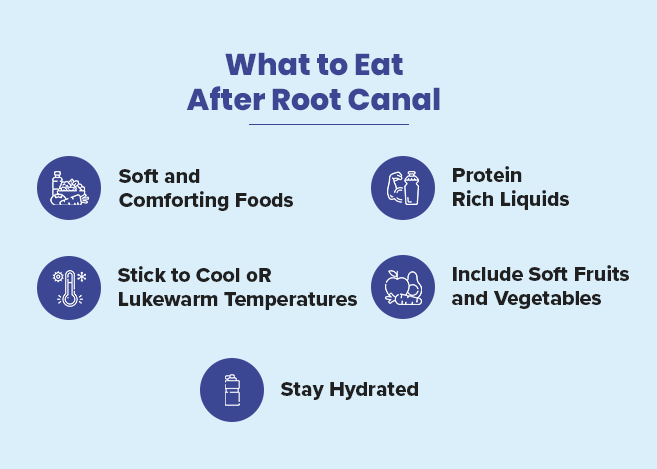
What to Eat After Root Canal Treatment?
For the first 48 hours, stick to soft foods at room temperature or cool. Hot food and drink increase sensitivity in the treated area. Hard or chewy foods risk damaging the temporary filling.
Good choices in the first few days:
- Curd rice, idli, soft khichdi
- Bananas, mashed dal, avocado
- Yoghurt, smoothies, room temperature soups
- Steamed vegetables, soft-cooked eggs
Avoid the treated side entirely when eating until your permanent crown is placed. Once the crown is in, you can return to your normal diet.
Is the Aftercare Different for Laser Root Canal Treatment in Chennai?
Largely, no. The aftercare guidelines are the same.
Laser root canal treatment in Chennai uses a dental laser as an adjunct to conventional cleaning instruments to disinfect the root canal space with greater precision. It doesn’t replace the conventional procedure. It supports it, particularly in clearing bacterial load from curved or narrow canals where instruments alone have limitations.
Some patients report slightly less post-procedure soreness after laser-assisted root canal treatment compared to conventional RCT alone, though individual experience varies and this isn’t consistent across all cases.
Read about how root canal treatment is performed with laser dentistry to understand when laser assistance is clinically indicated and what it involves.
The do’s and don’ts listed above apply equally whether you’ve had conventional or laser-assisted treatment.
Not Sure Whether You Need Root Canal Treatment?
Sometimes a deep cavity and root canal treatment look similar from the outside. Pain when biting, sensitivity to hot and cold, and visible decay can point to either.
Read about when a deep cavity needs root canal treatment and when it doesn’t before deciding which path your case needs.
Book Your Root Canal Consultation at Radiant Dental Care
Our endodontic team at Radiant Dental Care performs root canal treatments across all tooth types using rotary instruments and laser-assisted disinfection where clinically indicated. Dr Sreenayana Sinha Roy, MDS, recognised for her expertise in endodontics and restorative dentistry, oversees clinical standards across our 10 Chennai locations.
Every patient at our clinics gets aftercare instructions specific to their case after the procedure, not a generic handout. If you’re looking for root canal treatment in Chennai and want to understand your options before deciding, a consultation is the right starting point.
Want to understand root canal treatment cost in Chennai before you book? That’s covered in full on our dedicated cost guide.
Book your root canal consultation at Radiant Dental Care across 10 clinics:Adyar,Chromepet,Guduvanchery,Medavakkam,Nanganallur,Navalur OMR,Perungudi OMR,Siruseri OMR,Tambaram East, and Thiruporur. Open 365 days, 10 AM to 9 PM.
Frequently Asked Questions
How long does pain last after root canal treatment?
Mild soreness and sensitivity typically last two to three days. It should reduce each day. Pain that worsens after day three or persists beyond a week needs a clinical review. Contact your dentist rather than waiting it out.
Can I brush my teeth after root canal treatment?
Yes. Brush gently twice daily, including around the treated tooth. Avoiding it entirely allows plaque and bacteria to build up around the temporary filling, which can cause secondary problems. Use a soft-bristled brush and avoid pressing hard on the treated area.
What is laser root canal treatment in Chennai and is aftercare different?
Laser root canal treatment in Chennai uses a dental laser alongside conventional instruments to disinfect the root canal space more thoroughly. Aftercare is the same as conventional RCT. Some patients experience slightly less soreness afterward, but the do’s and don’ts listed in this guide apply equally to both.
When should I be worried after root canal treatment?
Call your dentist the same day if you experience pain that worsens after day three, swelling spreading to your jaw or neck, fever above 38 degrees, visible pus, or difficulty swallowing. These are not normal healing signs and need prompt clinical attention.
Do I need a crown after every root canal treatment?
Back teeth, molars and premolars, almost always need a crown after root canal treatment because they take the highest biting force and are at risk of fracture without one. Front teeth may not always need a crown depending on how much natural tooth structure remains. Your dentist will confirm this at your follow-up appointment.
Categories:
- Braces
- Cavity
- Crossbite
- Dental Bridge
- dental care
- Dental Clinic
- Dental Crown
- dental health
- dental hospital
- Dental Implants
- Franchise
- Home dentist
- invisalign
- Mamelons
- News
- pediatric dentist
- Root Canal Treatment
- Smile Makeover
- Teeth Aligners
- teeth alignment
- teeth cleaning
- teeth whitening treatment
- tooth extraction
- Tooth Hypersensitivity
- Uncategorized
Trending Posts
 +91 9513446186