Knocked Out or Loose Tooth: Symptoms, Causes and Treatments

FACT CHECKED
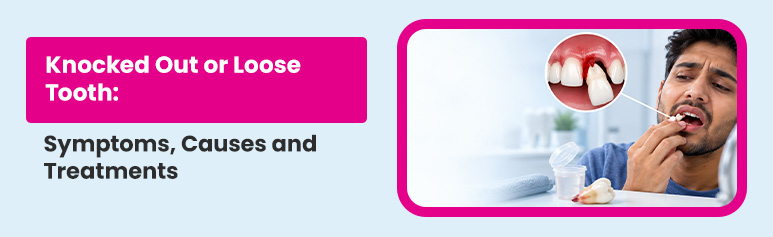
If a tooth just got knocked out or loosened, take a breath. What you do in the next 15 to 30 minutes matters more than almost anything else. Panic makes it harder to do the right things, and doing the wrong things can end the tooth’s chance of survival before you reach a dentist.
Dentists call a completely knocked-out tooth a dental avulsion. A loosened or partially displaced tooth is called a luxation. Both are dental emergencies. Both have specific first aid steps, and those steps differ depending on which situation you’re in.
At Radiant Dental Care, our Oral and Maxillofacial Surgery team manages dental trauma cases, including knocked-out and displaced teeth, across our Chennai clinics daily. This guide on “Avulsed Tooth (Knocked Out Tooth): What to Do” is written from that direct clinical experience. Every step below reflects what our surgeons actually do and advise in emergency cases. You can follow it with confidence.
Is the Tooth Knocked Out or Just Loose? Check This First
The first aid steps differ depending on whether the tooth is completely out of the socket or still partially in place. Check which situation applies before doing anything else.
| Knocked-Out Tooth | Loose or Displaced Tooth |
|---|---|
| Tooth completely out of the mouth | Tooth still in the socket but moved |
| Visible gap where the tooth was | Tooth feels wobbly or sits at the wrong angle |
| Root visible, socket bleeding | Gum around the tooth may bleed |
| Needs replantation within 30 minutes | Needs splinting at a clinic the same day |
| Adult teeth only — never replant baby teeth | Both adult and baby teeth need same-day assessment |
If you’re not sure which situation you’re in, treat it as a knocked-out tooth and act immediately.
What to Do Right Now If the Tooth Is Knocked Out?
You have a 30-minute window. Every minute beyond that reduces the tooth’s chance of survival. Here’s exactly what to do.
- Step 1: Pick It Up by the Crown Only – The crown is the white part you normally see in the mouth. Never touch the root. The root carries living cells that make replantation possible. Fingerprints, dirt, and pressure from your fingers damage those cells immediately.
- Step 2: Rinse It Gently If It’s Dirty – Hold the tooth under cool water for no more than 10 seconds. Do not scrub it. Do not use soap, alcohol, mouthwash, or any cloth or tissue. Scrubbing removes the root cells the socket needs to reattach to the tooth.
- Step 3: Try to Put It Back in the Socket – If the patient is calm and old enough, gently slide the tooth back into the gap in the correct direction. Bite down softly on a clean cloth to hold it in place. This single step gives the tooth the best possible chance before you reach a dentist.
- Step 4: If You Can’t Put It Back, Keep It Moist – Place the tooth in cold milk. If milk isn’t available, the patient can hold it inside the cheek between the gum and lower lip. Do not store it in water. Water destroys root cells faster than any other liquid. Never wrap the tooth in tissue or cloth.
- Step 5: Get to a Dentist Immediately – Call the clinic ahead so they prepare for your arrival. Every minute beyond 30 reduces the chance of the tooth being saved.
⚠️ Do Not Replant a Baby Tooth.
Pushing a knocked-out baby tooth back into the socket can damage the developing adult tooth underneath it. See a dentist the same day to check for other damage, but do not attempt replantation.
What to Do If the Tooth Is Loose or Displaced?
A loose or displaced tooth is less urgent than a knocked-out tooth, but it still needs same-day care. The nerve and blood supply to the tooth are under stress. Without treatment, the tooth often dies and eventually needs removal.
Here’s what to do while you get to the clinic:
- Do not push the tooth back into position yourself. You risk damaging the socket further.
- Bite down very gently on a clean cloth to reduce movement.
- Apply a cold compress on the outside of the cheek to control swelling.
- Avoid eating or drinking anything hot, cold, or hard on that side.
- Get to a dentist the same day. The dentist repositions and splints the tooth so the socket heals around it.
What Causes a Tooth to Get Knocked Out or Loosened?
Dental avulsion and luxation almost always result from sudden physical impact. Common causes include:
- Sports injuries, particularly contact sports played without a mouthguard
- Falls in young children, especially when learning to walk or run
- Road accidents and vehicle collisions
- Physical altercations
- Biting into an unexpectedly hard object with significant force
Prevention: A custom-fitted mouthguard from a dentist provides significantly better protection than an over-the-counter option. For children in contact sports, this is the single most effective preventive step available.
What Does the Dentist Do When You Arrive?
Most emergency dental blogs stop at “get to a dentist.” Here’s exactly what happens at the clinic so you know what to expect when you walk in.
For a Knocked-Out Tooth Brought in Time:
- The dentist takes an X-ray to assess the socket condition and check whether any root fragments remain inside.
- If the tooth is viable, the dentist repositions it in the socket.
- A splint attaches the tooth to the adjacent teeth for 7 to 10 days to hold it stable while the bone begins to reattach.
- Root canal treatment follows in almost every replantation case. The nerve inside the tooth gets damaged during avulsion and needs to be removed to prevent infection in the replanted tooth.
- Follow-up visits monitor whether the bone accepts the tooth back over the following weeks.
For a Loose or Displaced Tooth:
- X-ray confirms the root position and checks the surrounding bone.
- The dentist repositions the tooth manually under local anaesthesia.
- A splint holds it stable for 4 to 6 weeks depending on the severity of the displacement.
- Root canal treatment may be needed if the nerve was damaged during the injury.
If the Tooth Cannot Be Saved:
A dental implant replaces the gap permanently and prevents surrounding teeth from shifting into the empty space. Your dentist discusses this option once the immediate emergency is resolved.
Read about root canal treatment after tooth replantation to understand what the procedure involves and what recovery looks like.
Get Emergency Dental Care at Radiant Dental Care in Chennai
A knocked-out or loosened tooth is one of the few true dental emergencies where the outcome depends almost entirely on how fast you act and how correctly you handle the tooth in the first few minutes.
At Radiant Dental Care, our Oral and Maxillofacial Surgery team handles dental trauma and emergency oral surgery across 10 Chennai clinics. We offer painless dental treatment using computer-controlled anaesthesia for a more comfortable experience in selected emergency procedures. If you’re in pain or anxious, tell us when you call and we plan the visit accordingly.
If you’re searching for dental services near me or an affordable and best dentist near me for a dental emergency, call us immediately. Don’t spend time searching. Every minute counts.
Frequently Asked Questions
Can a Knocked-Out Tooth Be Saved After 1 Hour?
The best chance of saving a knocked-out tooth is within 30 minutes. After that, survival rate drops with every passing minute. Teeth stored correctly in cold milk and brought in within 1 hour can sometimes still be replanted, but success is less predictable. Get to a dentist as fast as possible regardless of how much time has passed.
What Is the Best Liquid to Store a Knocked-Out Tooth In?
Cold milk is the best widely available option. It keeps the root cells alive for up to 2 to 3 hours. If milk isn’t available, the patient’s own saliva held inside the cheek is the next best option. Cool water is the last resort. Never let the tooth dry out and never wrap it in cloth or tissue.
Should I Replant My Child’s Knocked-Out Baby Tooth?
No. Never replant a knocked-out baby tooth. Pushing it back into the socket risks damaging the permanent tooth developing underneath. Take your child to a dentist the same day to check for other damage, but leave the tooth out of the socket.
Will I Need a Root Canal After a Knocked-Out Tooth Is Replanted?
Almost always yes. When a tooth gets knocked out, the nerve inside gets severed or damaged. Root canal treatment removes the damaged nerve tissue and prevents infection from developing inside the replanted tooth. Your dentist schedules this shortly after the tooth is stabilised with a splint.
What If I Can’t Get to a Dentist Within 30 Minutes?
Keep the tooth in cold milk and get there as fast as possible. The 30-minute mark is the optimal window, but a tooth stored correctly in milk can sometimes survive up to 1 hour outside the socket. Call the clinic ahead so they are ready the moment you arrive.
Categories:
- Braces
- Cavity
- Crossbite
- Dental Bridge
- dental care
- Dental Clinic
- Dental Crown
- dental health
- dental hospital
- Dental Implants
- Franchise
- Home dentist
- invisalign
- Mamelons
- News
- pediatric dentist
- Root Canal Treatment
- Smile Makeover
- Teeth Aligners
- teeth alignment
- teeth cleaning
- teeth whitening treatment
- tooth extraction
- Tooth Hypersensitivity
- Uncategorized
Trending Posts
 +91 9513446186