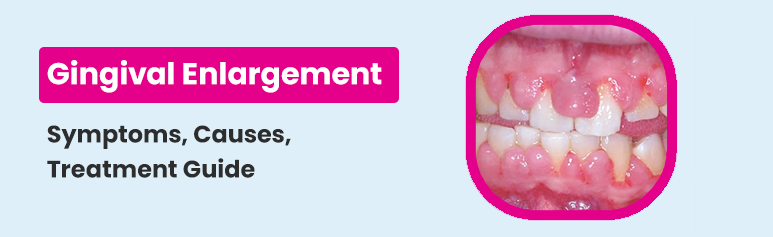
Gingival Enlargement – Symptoms, Causes, Treatment Guide

FACT CHECKED
Swollen gums can feel like a small issue, until the brushing hurts or bleeding starts. Many people try ways like switching toothpaste or brushing harder, making the gums even more angrier. The truth is, it can be gingival enlargement and the right fix depends on the cause of swollen gums.
Gingival enlargement is treatable, and most cases improve when the trigger is removed early following a dentist led plan. This blog by experts at Radiant Dental Care discusses gingival enlargement symptoms, causes, and how dentists confirm the diagnosis, based on your situation.
If you are searching for a dental clinic near me and want a next quick step, Radiant Dental Care offers gum evaluations, gum treatments, advanced dental technology, and strong safety protocols across multiple locations in Chennai.
What is Gingival Enlargement?
Gingival enlargement means your gum tissue has increased in size. In this situation your gums look puffy, thick, or overgrown. It can either be soft and red, or firm and bulky. This difference matters because it points to the underlying cause of enlargement.
If gums enlarge to the point where cleaning becomes difficult, the problem can be serious because more plaque gets trapped around the gum line.
A useful way to self check is to notice the pattern. Does it bleed easily and look inflamed? Your dentist will also use these clues to confirm the reason and guide you the plan ahead.
Which Gingival Enlargement Symptoms Should You Take Seriously?
The symptoms should be taken seriously when they repeat, worsen, or make daily cleaning harder.
- Puffy Gums that bleed easily.
- A gum line that looks uneven
- Swelling with pus or sharp pain
- Plaque build up.
- Soreness near the gum line.
- Loose tooth feeling or visible gaps.
- Bleeding while brushing
If any red flag is present, it is safer to stop guessing and get a dental exam done.
What are the Most Common Causes for Gingival Enlargement?
One of the biggest gingival enlargement causes is gum inflammation. When plaque sits near the gum line, the gum tissue leads to swelling, redness, and bleeding. Over time, the swelling can make the cleaning harder.
Another major cause is gum overgrowth. Certain medicines are known to cause gum tissue enlargement. If you started a long term medicine and noticed gum changes after that, it is important to consult.
Hormones and health factors can contribute too. Diabetes, smoking, dry mouth, low immunity, or poor nutrition can make gum inflammation worse and healing slower. Thus, gingival enlargement does not happen because of one specific cause.
How is Gingival Enlargement Diagnosis Confirmed By a Dentist?
Diagnosis is confirmed by a clinic gum exam, gum measurements, checking gum shape, swelling pattern, bleeding points, and whether deeper gum disease pockets are present.
Most dentists will do a structured check that includes:
- Gum examination for redness or swelling.
- Plaque assessment near the gum line.
- Gum pocket measurements.
- Tooth mobility and bite check.
- Dental X rays.
In some cases, additional testing may be suggested. If you are choosing between a dental clinic in Chennai and a dental hospital in Chennai, look for a place that does these checks properly and explains what they found to you in simple language.
Which is the Best Gingival Enlargement Treatment Plan For You?
The best plan is the one that matches your cause and severity, because the treatment for plaque related swelling is different from medicine related overgrowth. In most cases, gingival enlargement treatment is a mix of professional gum care plus a home routine that prevents recurrence.
If the overgrowth is severe, recurring, or affecting your smile and bite, a dentist may suggest gum contouring or other periodontal procedures. A simple home routine that supports most treatment plans:
- Use a soft brush and gentle circular motion at the gum line.
- Clean between teeth daily because that is where swelling begins.
- Do not stop brushing because of bleeding, brush gently.
- Avoid tobacco and manage dry mouth triggers.
A good plan also includes follow up. Gums do not always shrink back overnight, but they do improve with consistent care.
Visit Radiant Dental Care For Gingival Enlargement Treatment In Chennai
If your gums are enlarging, bleeding often, or making it hard to brush properly, it is time to confirm the cause and start a plan with the best dentist in Chennai. Radiant Dental Care provides gum evaluations and gum treatments with a focus on comfort, safety, and predictable outcomes.
We also make follow ups easier with multiple clinics across Chennai, and appointment support across all days of the week.
If you have been searching for the dental hospital near me or the best dental clinic in Chennai, book a gum check early. Call- +91 9513446186.
FAQs
When should I worry about gum swelling growing fast?
If the swelling increases quickly, bleeding starts without brushing, or it comes with pus , get checked as soon as possible.
Does gum enlargement mean I will need surgery?
Not always. Many people improve with cleaning and correcting the trigger for gum enlargement.
What is the quickest way to reduce bleeding gums at home?
Brush gently with a soft brush, clean between teeth daily, and avoid skipping the swollen area. If bleeding persists beyond a week, book a dental evaluation.
How long does gingival enlargement treatment take?
It depends on the cause and severity. Some cases improve within a few weeks after cleaning and routine correction, while medicine related or severe cases may need longer time and procedures.
Categories:
- Braces
- Cavity
- Crossbite
- Dental Bridge
- dental care
- Dental Clinic
- Dental Crown
- dental health
- Dental Implants
- Home dentist
- invisalign
- Mamelons
- News
- pediatric dentist
- Root Canal Treatment
- Smile Makeover
- Teeth Aligners
- teeth alignment
- teeth cleaning
- teeth whitening treatment
- tooth extraction
- Tooth Hypersensitivity
- Uncategorized
Trending Posts
 +91 9513446186