Various Methods of Oil Pulling to Treat Dental Issues

FACT CHECKED
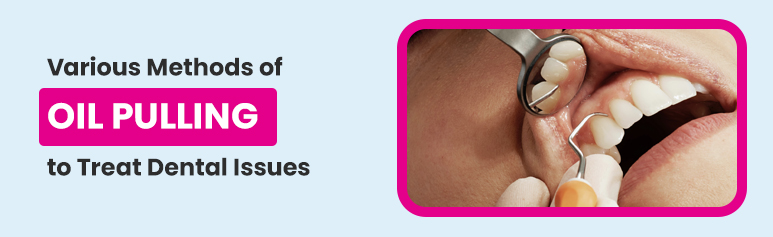
Bad breath, sticky plaque, mild gum irritation and that unclean mouth feeling pushes people to try home remedies before they book a dental visit. This also includes the practice of oil pulling. It may support oral hygiene in some cases, but it does not replace brushing, flossing or treatment for cavities. Very little proof suggests that it may help with plaque or gum inflammation and even mouth odour for some people.
In this guide, you will learn the different methods of oil pulling, the oils you can use, and the safe way to add it to your routine. You will also learn when you should see a dentist in Chennai instead of relying on home remedies.
At Radiant Dental Care, one of the leading dental clinic in Adyar and Chennai, our dental experts help patients with a wide range of oral and dental treatments. Our treatments are clinically approved and focused on long-term oral health.
In this blog, you will learn about oil pulling, how it is done, which oils are commonly used, and the possible benefits for oral hygiene. We also explain its limitations, common mistakes people make, and when it is important to stop home remedies and consult a dentist for proper treatment.
What Are The Main Methods Of Oil Pulling People Use At Home?
The main method of oil pulling most people follow is swishing edible oil in the mouth for several minutes. In traditional Ayurveda, this practice is explained in two ways: Kavala, where you actively swish a smaller amount of oil, and Gandusha, where you hold more oil in the mouth without moving it much.
| Method | How people do it at home |
|---|---|
| Kavala | Take a small amount of oil and swish it gently around the teeth and gums |
| Gandusha | Fill the mouth with oil and hold it still for a few minutes without active swishing |
While you do it, remember:
- Most people do oil pulling in the morning on an empty stomach.
- A common starting amount is about one tablespoon of oil.
- At first, people only do it for 5 to 10 minutes until they are comfortable to do it for a longer period.
- After spitting out oil, you must not forget to rinse well and brush as usual.
If you still notice gum trouble or mouth odour after trying home care, a dentist in Chennai should check the real cause. Dentists from the best dental clinic in Adyar advise not to self diagnose and ignore red flags like persistent odour.
Which Oils Are Commonly Used For Oil Pulling, And How Are They Different?
The good news is that most people choose from a small group of commonly used oils, and each one has a slightly different role in a home oral care routine.
| Oil | Properties |
|---|---|
| Coconut oil | Popular for its mild taste and high lauric acid content. Many people choose it for everyday use. |
| Sesame oil | The traditional Ayurvedic choice. People use it for gum comfort and overall oral care. |
| Sunflower oil | A lighter option with a milder taste. Some people prefer it when they want a more neutral feel. |
| Olive oil | Less common, but still used by some people as an edible oil option. |
People tend to choose cold pressed and unrefined oils. Besides, it is vital to note that oil can support hygiene, but it cannot fix extreme dental or oral conditions.
If you are exploring different oils for daily oral care, remember that home practices should only support hygiene, not replace proper treatment. Many people searching online for the methods of oil pulling to treat dental issues try several variations before understanding what actually works for their mouth.
If this particular one or similar dental issues continue, it is wiser to speak with a dentist in chennai who can identify whether the concern relates to plaque build-up, gum inflammation, or something deeper.
How Do You Do Oil Pulling Safely Without Making Dental Problems Worse?
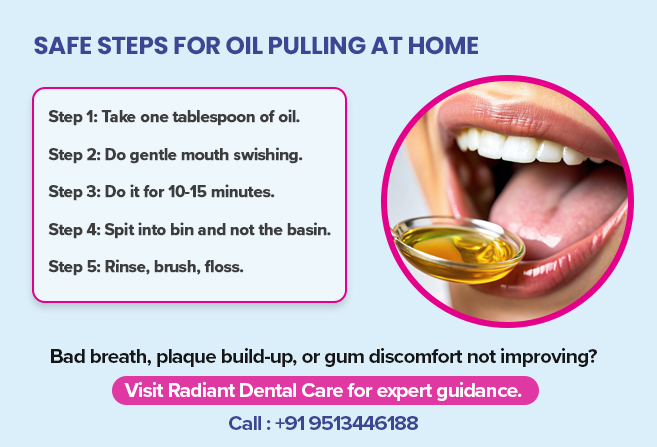
The safest way to do oil pulling is simple and cheap. You have to use only one tablespoon of edible oil and swish it gently in your mouth. Make sure you don’t swallow it. Ayurvedic experts suggest to do this in the morning before eating food. Follow the steps below if you are doing it for the first time:
In many cases like gum bleeding and bad odour, home care is not enough. Hence, the safer next step is a proper dental check-up at the nearest best dental clinic in chennai where a dentist can see what the issue is and guide you.
Which Professional Dental Treatments Help When Oil Pulling Is Not Enough?
Oil pulling may support oral hygiene, but it cannot remove hardened tartar, close a cavity, or treat an infection deep inside the tooth. Once damage has started, the mouth needs proper dental treatment, not just a home routine. This is where the methods of oil pulling to treat dental issues reach their limit.
The right treatment depends on what the real problem is:
- Professional cleaning: This helps remove plaque and tartar that have hardened on the teeth and along the gum line. Oil pulling cannot lift these deposits away.
- Deep cleaning for gums: If gum swelling or bleeding continues, dentists may clean below the gum line to control infection and support gum healing.
- Dental fillings: If decay has already formed a cavity, the damaged part of the tooth must be cleaned and filled.
- Crowns: If a tooth has lost too much structure, a crown helps protect and restore it.
- Root canal treatment: If pain comes from infection inside the tooth, this treatment removes the infected tissue and saves the tooth.
If you are looking for a trusted best dental clinic in chennai to avail any of the above-mentioned services, Radiant Dental Care is the best choice. At Radiant Dental Care, patients come in after trying home remedies and then finding out they need the right diagnosis first.
Book A Dental Check-Up At Radiant Dental Care!
If oil pulling has not helped with bad breath, plaque build-up, gum irritation, or tooth pain, it is time to get the real cause checked. At Radiant Dental Care, patients can avail preventive dental check-ups, professional cleaning, gum care, fillings, crowns, and root canal treatment based on what their mouth actually needs. For people looking for the best dental clinic in Adyar, our team helps with a complete treatment plan.
If bad breath, sticky plaque or gum discomfort keeps coming back, book a visit with Radiant Dental Care at +91 95134 46188 and get the right solution.
FAQs
Which oil is best for oil pulling to support oral hygiene?
Coconut oil and sesame oil are the most commonly used options. Coconut oil feels easier for many people, while sesame oil has a more traditional Ayurvedic link.
How long should you swish oil in your mouth for oil pulling?
Most people swish for 10 to 15 minutes. Beginners can start with 5 minutes and increase slowly if they feel comfortable.
Can oil pulling remove plaque or tartar from teeth?
Oil pulling may support oral hygiene, but it cannot remove hardened tartar. Professional cleaning is needed once tartar builds up on the teeth.
Is oil pulling enough to treat cavities or gum disease?
No. Oil pulling cannot fix cavities, deep gum infection, or tooth pain caused by decay. These problems need proper dental treatment.
When should you see a dentist instead of relying on oil pulling?
See a dentist if you have bleeding gums, bad breath that stays, tooth pain, swelling, or visible deposits on teeth. These signs usually need a proper check-up.
Categories:
- Braces
- Cavity
- Crossbite
- Dental Bridge
- dental care
- Dental Clinic
- Dental Crown
- dental health
- dental hospital
- Dental Implants
- Franchise
- Home dentist
- invisalign
- Mamelons
- News
- pediatric dentist
- Root Canal Treatment
- Smile Makeover
- Teeth Aligners
- teeth alignment
- teeth cleaning
- teeth whitening treatment
- tooth extraction
- Tooth Hypersensitivity
- Uncategorized
Trending Posts
 +91 9513446186