Dry Mouth and Diabetes: Symptoms, Causes and Treatment

FACT CHECKED
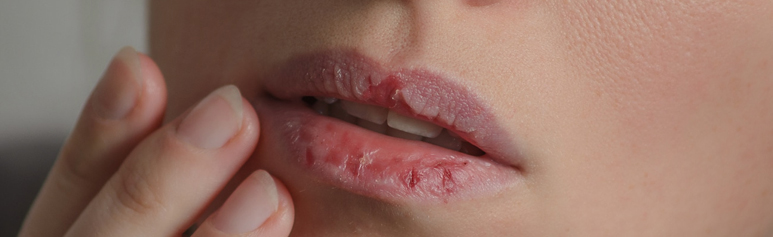
Your mouth has been dry for weeks. You have diabetes. You’ve been told to drink more water. It hasn’t fully helped.
That’s not a coincidence and it’s not just a comfort problem. Diabetes causes dry mouth through three separate mechanisms. Persistent dry mouth in a diabetic patient is a dental concern, one that affects your teeth and gums in ways most patients don’t realise until the damage has already started.
Radiant Dental Care sees diabetic patients with oral health concerns across all 10 clinics in Chennai. If you’ve been looking for a dentist in Chennai who understands how diabetes affects your mouth, this page explains exactly what’s happening and what to do about it.
Why Does Diabetes Cause Dry Mouth?
Diabetes doesn’t cause dry mouth through one route. There are three distinct mechanisms, and they can all occur at the same time.
-
High Blood Sugar Draws Water From the Body
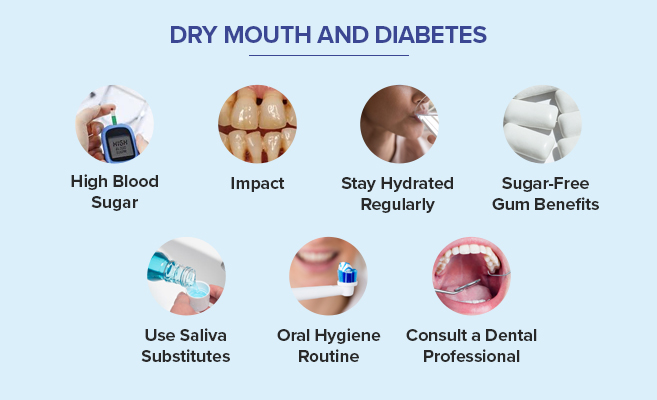
When blood glucose is elevated, the body loses more fluid through frequent urination. This dehydration reduces the fluid available for saliva production. The salivary glands, which are the glands responsible for producing saliva, get less water to work with and produce less output.
According to published guidance from the National Institute of Diabetes and Digestive and Kidney Diseases (NIDDK), people with diabetes are significantly more prone to dry mouth as a direct result of poorly controlled blood sugar.
-
Diabetic Nerve Damage Affects the Salivary Glands
Over time, diabetes can damage the nerves that control the salivary glands. This is part of a broader condition called diabetic neuropathy. Even when blood sugar is better managed, nerve damage can reduce saliva production independently, which is why some patients find their dry mouth persists even after their numbers improve.
-
Medication Side Effects
Metformin, the most commonly prescribed diabetes medication, lists dry mouth as a frequent side effect. Blood pressure medications prescribed alongside diabetes management, including certain diuretics and ACE inhibitors, carry the same effect.
This is a listed, documented side effect. It doesn’t mean the medication is wrong for you. But it does mean dry mouth may have more than one cause in your case.
What Is Saliva Actually Doing in Your Mouth?
Most patients think of saliva as just moisture. It does far more than that.
Saliva is your mouth’s primary defence system. Every time you eat, bacteria in your mouth produce acid. Saliva neutralises that acid before it can attack enamel. It physically washes bacteria and food particles from tooth surfaces. It contains proteins that protect enamel and fight early infection. It also helps small wounds inside the mouth heal faster.
Xerostomia is the clinical term for dry mouth, where salivary glands don’t produce enough saliva to perform these functions. Without enough saliva, every one of those protections stops working, at the same time, continuously, every day.
This is why dry mouth in a diabetic patient is not a discomfort issue. It is a dental emergency in slow motion.
What Is Dry Mouth Doing to Your Teeth and Gums?
This is the part most patients need to understand clearly. Dry mouth in a diabetic patient doesn’t just cause discomfort. It creates three specific oral health risks that compound each other.
Tooth Decay Accelerates
Without saliva to neutralise acids and wash away bacteria, cavities form faster. Diabetic patients already heal more slowly and have a reduced immune response to oral bacteria. Dry mouth removes the one mechanism that naturally keeps bacterial acid in check between brushing.
The result is decay that progresses faster than in non-diabetic patients, even with good brushing habits.
Gum Disease Sets In Faster
According to the NIDDK, people with diabetes have a significantly higher risk of periodontal disease, which is infection and inflammation of the gums and bone that support the teeth. Dry mouth makes this worse.
Without saliva to clear bacteria from the gum line, plaque accumulates faster. Combined with the slower healing and reduced immune response that diabetes already causes, gum disease in diabetic patients can progress from mild inflammation to significant bone loss more rapidly than in patients without diabetes.
Oral Thrush Becomes a Real Risk
Dry mouth and elevated blood sugar together create conditions where Candida, a naturally occurring fungus, can overgrow. Oral thrush is the result, a fungal infection that appears as white patches inside the cheeks or on the tongue. It requires clinical treatment, not just home care.
One point that connects all three: poor oral health from persistent dry mouth also makes blood sugar harder to control. According to guidance from the American Dental Association, the relationship between diabetes and oral health runs in both directions. Oral infection raises inflammation markers that interfere with insulin function. Managing dry mouth and its dental consequences is part of managing diabetes, not separate from it.
What Can You Do at Home?
These steps reduce dryness and protect your teeth daily. They don’t replace dental care but they matter every day.
- Sip water frequently in small amounts throughout the day, consistent sips work better than drinking large amounts at once
- Breathe through your nose, especially at night, mouth breathing dries the oral cavity significantly faster
- Avoid caffeine, alcohol, and tobacco, all three reduce saliva production
- Use a fluoride toothpaste and fluoride mouth rinse daily to protect enamel that’s no longer getting saliva’s natural protection
- Chew sugar-free gum containing xylitol, xylitol stimulates saliva production and also reduces cavity-causing bacteria
- Talk to your physician if a current medication seems to be worsening dry mouth, a dosage review or timing change may be possible without changing the medication itself
When Should You See a Dentist About Dry Mouth?
Dry mouth that has persisted for more than a few weeks in a diabetic patient needs a dental assessment, not just home care. Book an appointment with dentist in Chennai if you notice any of these:
- Dry mouth has lasted more than three to four weeks without improving
- You’re getting new cavities despite brushing and flossing regularly
- Your gums bleed when brushing or feel tender without an obvious cause
- You notice white patches on the tongue or inside the cheeks
- You have persistent bad breath that doesn’t clear after brushing
- You feel a burning sensation on your tongue
A dentist in Chennai who knows your diabetic history can assess your enamel condition, gum health, and saliva levels and put a care plan in place that accounts for your specific situation.
Book Your Diabetes Oral Health Check at Radiant Dental Care
Every appointment at Radiant Dental Care begins with a full oral assessment before any treatment is recommended. For diabetic patients dealing with dry mouth, here’s what Radiant Dental Care offers:
- Professional scaling and polishing to remove plaque and tartar that accumulates faster with reduced saliva
- Gum assessment and treatment for early or active periodontal disease
- Fluoride application to protect enamel weakened by persistent dry mouth
- Oral examination for early signs of thrush or infection
- Written treatment plan and cost estimate before any procedure begins
Patients looking for a dental hospital in Chennai that handles diabetic oral health can find Radiant Dental Care across Adyar, Tambaram East, Chromepet, Nanganallur, Medavakkam, Navalur OMR, Siruseri OMR, Perungudi OMR, Guduvanchery, and Thiruporur.
For patients searching for an affordable dental clinic in Chennai with transparent pricing, Radiant Dental Care provides a written cost breakdown after every clinical assessment, before treatment begins. No surprise charges at billing.
Patients looking for the best dental clinic in Chennai near me for diabetic oral care can walk in or book online. Open 365 days, 10 AM to 9 PM.
Book your diabetes oral health check at Radiant Dental Care Call: +91 9513446186
Frequently Asked Questions
Does Diabetes Always Cause Dry Mouth?
Not always, but it’s common. High blood sugar, diabetic nerve damage, and medication side effects can each cause dry mouth independently or together.
Is Dry Mouth a Sign of Poorly Controlled Blood Sugar?
Often yes. But nerve damage and medication side effects can also cause dry mouth even when blood sugar is reasonably managed. A dental and medical assessment together gives a clearer picture.
What Does Dry Mouth Do to Teeth Over Time?
It removes the mouth’s natural defence against bacteria. Tooth decay, gum disease, and oral fungal infection all accelerate without enough saliva to neutralise acid and clear bacteria daily.
How Often Should a Diabetic Patient See a Dentist?
At least twice a year for most patients. More frequently if active gum disease, new decay, or signs of oral infection are present. Ask your dentist in Chennai for a schedule suited to your case.
Do Home Remedies Fix Dry Mouth in Diabetics?
They help manage symptoms. Frequent water sips, xylitol gum, fluoride products, and nasal breathing all reduce dryness. But they don’t address the underlying causes — blood sugar, nerve damage, or medication effects.
Can Radiant Dental Care Help With Diabetic Dry Mouth?
Yes. Scaling, gum treatment, fluoride application, and oral infection screening are available across all 10 Radiant Dental Care clinics in Chennai. A written cost estimate is given before any treatment begins.
Categories:
- Braces
- Cavity
- Crossbite
- Dental Bridge
- dental care
- Dental Clinic
- Dental Crown
- dental health
- dental hospital
- Dental Implants
- Franchise
- Home dentist
- invisalign
- Mamelons
- News
- pediatric dentist
- Root Canal Treatment
- Smile Makeover
- Teeth Aligners
- teeth alignment
- teeth cleaning
- teeth whitening treatment
- tooth extraction
- Tooth Hypersensitivity
- Uncategorized
Trending Posts
 +91 9513446186