Amelogenesis Imperfecta, Symptoms, Causes and Treatment

FACT CHECKED
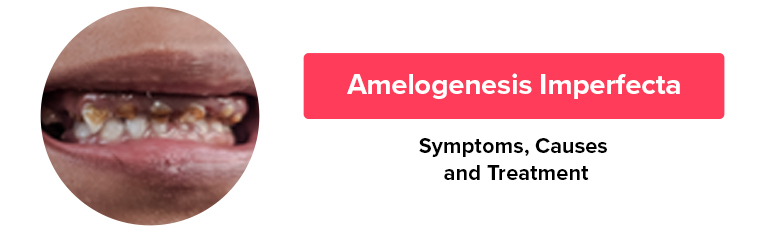
The strength, color and structure of our teeth depend heavily on how enamel forms. When this natural process is disrupted, conditions like Amelogenesis Imperfecta appear, affecting far more than just appearance. From sensitivity and weak enamel to early wear, this hereditary condition raises real concerns for both children and adults seeking lasting oral health solutions.
Understanding the symptoms, causes and modern treatment options for Amelogenesis Imperfecta is the first step toward restoring confidence and function. With advanced diagnostic and restorative expertise at Radiant Dental Care, individuals dealing with Amelogenesis Imperfecta can explore tailored treatment options that rebuild the smile with strength and clarity. Read on to uncover everything you need to know about Amelogenesis Imperfecta and the proven, professional ways to manage it effectively.
What Is Amelogenesis Imperfecta?
Amelogenesis Imperfecta is a single less common but very significant genetically passed down disorder that interferes the formation of the enamel layer of the teeth.
Enamel is the layer of the tooth that makes it strong, safe and attractive. Teeth without a proper enamel layer become extremely fragile they make the sufferer wrong by causing sensitivity and can be damaged in a slight way.
The disorder impairs the development of the primary as well as permanent teeth, consequently, inducing the aesthetic concerns and functional limitations that necessitate the dental treatment of the patient for a prolonged period. The majority of parents discover the problem at the time when a child’s milk teeth look excessively yellow, brown, or pitted. Some people only get the diagnosis at the time of adolescence when permanent teeth erupt with the appearance of defects.
Types of Amelogenesis Imperfecta
There are four primary types of amelogenesis imperfecta, each showing different patterns of enamel development.
1. Hypoplastic Amelogenesis Imperfecta:
Enamel in this case is very thin, poorly developed and may not even cover the whole tooth surface. Teeth may look small and have grooves or pits.
2. Hypomaturation Amelogenesis Imperfecta:
The enamel is formed but it does not mature properly. It stays soft and is very likely to be chipped. Teeth may look opaque white, yellow or mottled.
3. Hypocalcified Amelogenesis Imperfecta:
Enamel is less than adequately mineralized, thus it is very weak. Teeth are often soft-looking, chalky and they get worn very quickly.
4. Hypomaturation-Hypoplastic with Taurodontism:
This is a mixture of defects in both the formation and maturation of enamel. Molar teeth usually have larger pulp chambers because of which dental treatment becomes more complicated.
Recognition of type is instrumental in deciding the proper restorative method, thus ensuring permanence and beauty of the result.
Amelogenesis Symptoms: How to Identify the Condition Early?
Early testing plays a key role in preventing further tooth damage. Although this condition can be inherited, its symptoms vary from person to person. Here are the most common signs to look out for:
Visible Symptoms:
- Thin, uneven, or missing enamel,
- Yellow, brown, or grey tooth discoloration,
- Teeth that appear small or irregular in shape,
- Pitted or grooved surfaces on the teeth,
- Increased gaps between teeth due to enamel underdevelopment.
Functional Symptoms:
- High tooth sensitivity to hot or cold foods,
- Frequent chipping or breaking of enamel,
- Difficulty chewing hard foods comfortably,
- Early wear and tear of teeth.
Oral Health Concerns:
- Increased risk of cavities due to weakened enamel,
- Higher chances of gum irritation or inflammation,
- Poor bite alignment caused by uneven enamel loss.
If these amelogenesis symptoms appear in a child or adult, seeking early dental evaluation is one of the most important steps to prevent complications.
What Causes Amelogenesis Imperfecta?
The underlying cause amelogenesis imperfecta is a genetic mutation. Amelogenesis causes are mostly genetic, which means the situation can be transferred from the family of the parents to the family of the children. But, not all instances have a recognizable pattern.
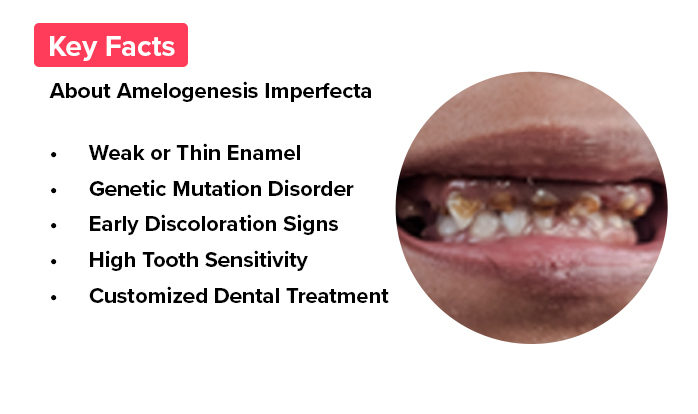
Primary Causes of Amelogenesis Imperfecta:
- Mutations in genes responsible for enamel formation, such as AMELX, ENAM and MMP20.
- Family history of enamel defects or similar dental issues.
Patterns of Genetic Inheritance:
- Autosomal dominant inheritance,
- Autosomal recessive inheritance,
- X-linked inheritance.
These patterns influence how amelogenesis Imperfecta appears in different family members.
Secondary Associated Factors:
While genetics are the primary cause for amelogenesis imperfecta, some external factors may influence enamel development in rare cases:
- Developmental issues during pregnancy,
- Metabolic disturbances in early childhood,
- Systemic health conditions affecting mineralization.
Understanding the causes for amelogenesis imperfecta helps dentists plan precise treatment and long-term monitoring to protect remaining tooth structure.
Diagnosis of Amelogenesis Imperfecta
Accurate diagnosis of amelogenesis imperfecta is essential, as treatment varies based on the severity and type of enamel defect.
Clinical Examination
A dentist evaluates the color, texture and thickness of enamel. The pattern of enamel loss may point toward a specific type of Amelogenesis Imperfecta.
Radiographic Analysis
X-rays help assess:
- Enamel thickness,
- Pulp chamber size,
- Position and development of unerupted teeth,
- Enamel-dentin contrast.
Family Medical History
Identifying genetic patterns helps confirm diagnosis and anticipate how the condition may progress.
Possible Genetic Testing
In complex cases, dentists may recommend genetic testing to determine the specific gene mutation involved.
Accurate diagnosis helps design a personalized treatment plan for amelogenesis imperfecta that safeguards oral function and long-term dental aesthetics.
Treatment Options for Amelogenesis Imperfecta
Treatment for amelogenesis imperfecta focuses on strengthening the teeth, reducing sensitivity, improving appearance and restoring function. The ideal approach depends on severity, enamel type, age and patient needs.
1. Restorative Treatments
- Dental bonding: A dental resin close to the natural tooth color is used to enhance the look and to protect the weak enamel.
- Composite or Porcelain Veneers: Thin pieces that are glued to the front part of the teeth in order to change the color and the shape and thus, they are very appropriate for the moderate defects of the enamel.
- Dental Crowns: Crowns wrap the whole tooth and thus, they offer a strong and durable protection. In general, they are the first choice to be used for severe cases of enamel loss, particularly in grown-ups.
- Stainless Steel Crowns for Children: The ones that are put on normally in the case where baby molars are in need of a long period of protection up to the time when permanent teeth come out.
2. Preventive and Supportive Treatments
- Fluoride Treatments: These can still help by making the enamel stronger that is left and also by reducing the sensitivity.
- Desensitizing Agents: These agents are helpful and comforting to the pain that is caused by the dentin that is exposed.
- Sealants: These are layers that protect the most vulnerable parts of the teeth from the development of caries.
- Enamel Microabrasion: This is a technique that can be used only in very light cases to get rid of the superficial defects.
3. Long-Term Functional Management
Orthodontic Treatment – Corrects bite alignment issues that may arise from enamel problems or uneven tooth wear.
Regular Monitoring – Teeth need ongoing checkups to prevent chipping and detect early signs of enamel breakdown.
Habit and Diet Modifications
- Avoid hard foods that may fracture enamel,
- Reduce acidic food consumption to prevent erosion,
- Maintain good oral hygiene to avoid cavities.
4. Full-Mouth Rehabilitation (For Severe Cases)
Cases with extensive enamel failure may require a full-mouth treatment plan involving:
- Crowns,
- Implants (if tooth loss has occurred),
- Bridges or partial dentures.
Why Early Treatment for Amelogenesis Imperfecta Matters?
Treating Amelogenesis Imperfecta early helps prevent:
- Enamel breakdown that worsens with time,
- Severe sensitivity or pain,
- Premature tooth loss,
- Difficulties with speech and chewing,
- Complex restorative dental procedures later in life.
Why Expert Care Matters: How Radiant Dental Care Helps You Manage Amelogenesis Imperfecta With Confidence?
Managing Amelogenesis Imperfecta isn’t just about improving the appearance of your teeth it’s about protecting your long-term oral health with the right expertise, technology, and guidance. That’s why choosing an experienced dental team becomes crucial.
With 15+ years of clinical excellence, Radiant Dental Care ensures every patient receives advanced diagnostics, personalised treatment plans, and gentle, specialised care tailored specifically for AI conditions. Their up-to-date restorative techniques and patient-first approach help you achieve not just better treatment outcomes but also a healthier, stronger, and more confident smile.
Ready to receive expert care? Contact Radiant Dental Care at +91 9513446186 to book your consultation today.
Frequently Asked Questions:
1. What is Amelogenesis Imperfecta and what impact does it have on the enamel?
Answer. Amelogenesis Imperfecta refers to a group of rare inherited disorders characterized by defects in the formation of the tooth enamel. As a result, the enamel may be weak, thin or improperly developed. The symptoms of the disorder can be the early wear, tooth sensitivity and the most obvious, the discoloration of the teeth. Diagnosis and treatment of AI at the earliest stage help to stop the progression of the disease thus, keep comfortable chewing and smiling.
2. What Early Symptoms of Amelogenesis Should Parents Recognize in Their Kids?
Answer. Some symptoms that parents can detect may include teeth already stained with yellow or brown colors, enamel which is so thin that even small pieces may break off, and also the dental surfaces that are very sensitive and have pits or dents. If your kid exhibits these early symptoms, you should give your kid an expert dentist in Chennai a visit as soon as possible for trustable diagnoses and efficient treatment.
3. What are the main causes of Amelogenesis Imperfecta in children and adults?
Answer. A significant factor that leads to Amelogenesis Imperfecta is a gene mutation that changes the proteins in the enamel-forming process. Mutations can be passed down from either parent or both together although in some instances, the condition may be formed even if there is no family history. Understanding the causes of Amelogenesis is very helpful for dentists to make a precise diagnosis and decide on suitable therapy.
4. How do Dentists Detect Amelogenesis Imperfecta?
Answer. Identification of the disorder by dental specialists usually comprises multiple approaches including clinical tests, radiographs, family history comprehension and sometimes genetic testing. To figure out the specific type and severity of Amelogenesis Imperfecta, they inspect not only enamel thickness but also tooth color, surface defects and bite alignment.
5. What are the Effective Treatment Choices for Amelogenesis Imperfecta?
Answer. The treatment is decided on based on the intensity of the case, be it mild or severe. The frequently exercised options are dental bonding, veneers, crowns, fluoride applications, desensitizing pastes, and at times orthodontics. To get comprehensive and lasting care, most patients make advanced dental centres like the top dental hospital in Chennai their regular treatment site where the specialists not only provide protective but also beautifying personalized treatment plans.
Categories:
Trending Posts
 +91 9513446186