The Silent Shift: How Teeth Change After Your 30s, 40s and Beyond.

FACT CHECKED
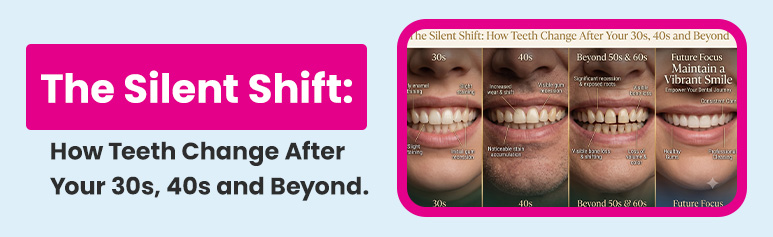
Nobody notices their teeth getting older the way they notice grey hair or a stiff knee. Dental changes after 30 don’t send a warning. Enamel thins slowly. Gums pull back a fraction of a millimetre each year. The bone that holds your teeth in place starts losing density long before anything feels loose. By the time something hurts, the shift has already happened.
Most of those changes are manageable when caught early. The problem isn’t that they’re inevitable. It’s that they’re quiet.
At Radiant Dental Care, a multi-specialty dental network across 10 clinics in Chennai, Dr Sreenayana Sinha Roy and Dr Swathi Ravipudi see teeth change after your 30s, 40s & beyond, daily in patients. This guide tells you what actually changes, decade by decade, and what each shift means for your teeth’s good long-term health.
What Happens to Your Teeth in Your 30s?
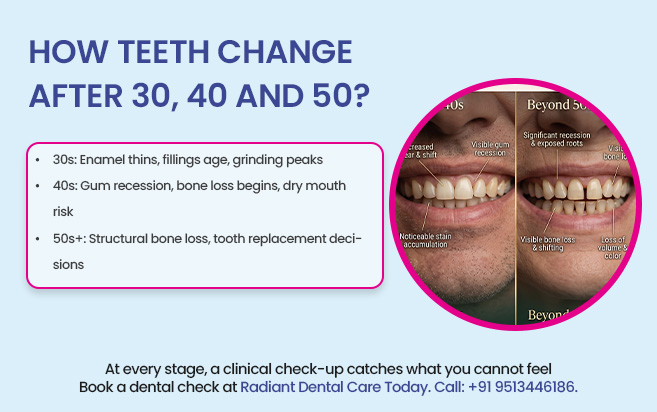
Your 30s are when the first quiet changes begin in your teeth. Enamel starts thinning, old fillings show wear, and the habits of the previous decade start showing up on X-rays.
- Enamel Starts to Thin
Enamel is the hard outer layer of your tooth. It has no nerves and no ability to regenerate. Once it wears down, it doesn’t grow back.
In your 30s, enamel erosion picks up pace. An acidic diet, carbonated drinks, and grinding all speed the process. Most people notice it first as sensitivity to cold drinks or ice cream.
- Old Fillings Start to Age
Fillings placed by the best dental clinic in Chennai in your teens or 20s typically last 10 to 15 years. By your mid-30s, many of those fillings are due for review. Composite and amalgam restorations develop microcracks and small gaps at the margins over time. Decay can restart underneath an old filling without any pain signal at all.
A filling that looks fine to you can be a root canal waiting to happen. Only an X-ray catches it.
- Teeth Grinding Becomes a Pattern
Bruxism (grinding or clenching teeth) often peaks in the 30s. Career stress and poor sleep both contribute. Signs to look for:
- Teeth that look flatter than they used to
- Jaw soreness in the morning
- Headaches that start near the temples
- A partner who mentions the sound at night
Unaddressed grinding is one of the fastest ways to lose enamel volume in the 30s.
What Changes in Your 40s, and Why Does It Matter More?
The 40s are where changes from the 30s compound. Gum health becomes the central concern, and bone density begins shifting beneath the surface.
Gum Recession Becomes Visible
Gum recession means the gum tissue pulls back and exposes the root surface of the tooth. The root has no enamel covering it. Exposed root means immediate sensitivity and a much higher risk of decay at the gumline.
One millimetre of recession sounds minor. Over a decade, it changes the entire structure of the tooth’s support. Signs that recession is already happening:
- Teeth look longer than they did five years ago
- Sensitivity concentrated at the gumline
- A visible defect at the base of a tooth
- Bleeding when brushing, even gently
Gum Disease Moves Deeper
Surface gum inflammation, called gingivitis, is common and reversible with proper cleaning. What happens in the 40s is different. Untreated gingivitis progresses to periodontitis, which is an infection that attacks the bone supporting the tooth.
Dr Swathi Ravipudi, MDS, Director and periodontics specialist at Radiant Dental Care, sees this pattern repeatedly. The X-ray at the dental clinic in Chennai shows bone loss that started years earlier.
Medications and Dry Mouth
Adults in their 40s often start long-term medications: blood pressure tablets, antihistamines, antidepressants. Many cause dry mouth. Saliva neutralises acid, remineralises enamel, and washes away bacteria. Your teeth depend on all three.
Less saliva means faster decay, faster gum breakdown, and a mouth that’s working against itself.
If you’re on long-term medication and your dentist in Adyar Chennai doesn’t know, that’s a gap in your treatment picture.
What Happens to Teeth After 50?
After 50, the changes accumulate into structural concerns. Bone density, tooth loss risk, and the decisions that come with missing teeth all move to the foreground.
- Bone Loss Affects Tooth Stability
The jawbone that holds your teeth loses density with age. In women, this accelerates after menopause due to reduced oestrogen levels. The bone reduces slowly and silently.
- The Replacement Question
When a tooth is lost after 50, acting within six to twelve months matters. The bone at the gap site starts resorbing immediately. Surrounding teeth drift. The opposing tooth over-erupts into the space. Acting early preserves more bone and keeps more options open.
- Cosmetic Changes Compound
Teeth yellow with age as enamel thins and the inner layer called dentine (naturally darker than enamel) shows through more. Teeth also shorten slightly from years of biting. Both are manageable with cosmetic treatment.
What Should You Actually Do at Each Stage?
Most of these changes are manageable by a dentist in Medavakkam. Here’s what each decade needs:
In Your 30s:
- Get a full check including X-rays if you haven’t in the last two years
- Ask about a nightguard if you wake with jaw soreness
- Proactively review fillings older than ten to twelve years
In Your 40s:
- Book a periodontal assessment
- Tell your dentist about any long-term medications
- Don’t skip the gum pocket measurement at your check-up
After 50:
- Address tooth loss within six to twelve months of losing a tooth
- Discuss bone density and implant suitability
- Maintain professional scaling every six months regardless of how clean your teeth feel
Book a Check-Up at Radiant Dental Care in Chennai.
A check-up at the right time is the difference between a filling and a root canal, between scaling and surgery, and between a manageable situation and one that’s progressed past the easy options.
Radiant Dental Care has completed over 50,000 procedures across 10 clinics in Chennai. The network holds a 4.9/5 rating on Google built on 100,000+ patients treated by 60+ doctors.
Flexible payment options including EMI are available at Radiant Dental Care, an affordable dental clinic in Chennai. Speak to the team at: +91 9513446186 or visit your nearest clinic to discuss payment plans that suit your budget.
Frequently Asked Questions
At What Age Do Teeth Start to Deteriorate?
Enamel wear and gum changes begin in the 30s. Bone density loss typically accelerates after 50, or earlier in women post-menopause.
Is Gum Recession Reversible?
Mild recession can stabilise with treatment. Lost gum tissue doesn’t regrow on its own. Gum grafting may restore coverage in selected cases.
Why Are My Teeth More Sensitive After 40?
Thinning enamel, gum recession, and exposed root surfaces all increase sensitivity. A dentist can identify which is causing it and recommend the right treatment.
How Often Should Adults Over 40 Visit a Dentist in Chennai?
Every six months. Adults over 40 with gum disease history or dry mouth may need more frequent visits.
Categories:
- Braces
- Cavity
- Crossbite
- Dental Bridge
- dental care
- Dental Clinic
- Dental Crown
- dental health
- Dental Implants
- Home dentist
- invisalign
- Mamelons
- News
- pediatric dentist
- Root Canal Treatment
- Smile Makeover
- Teeth Aligners
- teeth alignment
- teeth cleaning
- teeth whitening treatment
- tooth extraction
- Tooth Hypersensitivity
- Uncategorized
Trending Posts
 +91 9513446186