Yoga Asanas for Healthy Teeth & Gums

FACT CHECKED
Bleeding gums, a tight jaw or a dry mouth can make your mouth feel off. Most people try a new toothpaste or a different mouthwash but still feel no change. That is because the trigger is not always sitting on the teeth.
Stress clenching, mouth breathing, poor sleep, or neck tension because of more screen time can actually affect how your gums and jaw feel. To fix it, yoga for dental care can be a helpful add on.
This guide explains the link between yoga and oral health, the safest asanas to try, a simple 7 day routine, and the signs that mean you should see a dentist. If you are searching for the best dental clinic in Chennai, Radiant Dental Care can help you move to a sorted plan that actually makes sense for your symptoms.
What is the Link Between Yoga And Oral Health?
Yoga supports oral health by reducing stress and improving breathing habits. When stress is high,many people press their teeth together. Over time, that tension can show up as jaw tightness, headaches, and sensitivity.
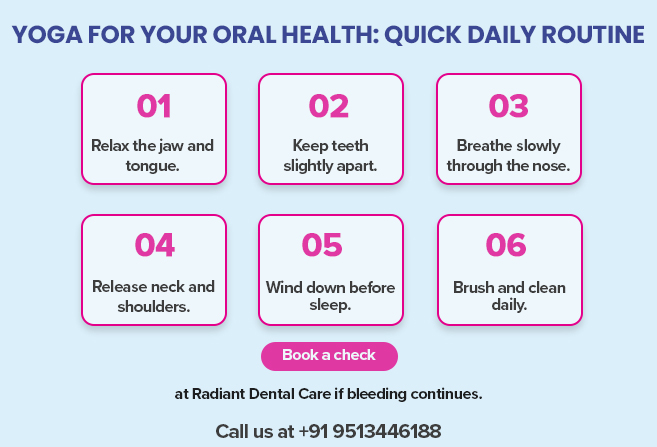
Yoga for your oral health helps by training the body to settle down. When your body calms down, your jaw follows.
Yoga does not clean your teeth, but it supports better posture, which helps in increasing the awareness of mouth breathing.
Think of yoga as a support for your routine, and it will improve the conditions around your mouth.
How is Yoga Helpful for Strong Teeth and Gums?
Yoga helps by reducing everyday triggers that irritate your gums. Here is how yoga for strong teeth and gums works:
- Jaw relaxation: When the jaw is not held tight, the jaw joints and chewing muscles get a break. This reduces morning tightness and facial fatigue.
- Better sleep: A short bedtime routine can help you fall asleep with less tension, helping people who grind at night.
- Breathing awareness: Slow breathing practices help notice when you are breathing from mouth.
- Posture support: Rounded shoulders and a forward head posture can make breathing feel shallow. Yoga gently opens the chest and releases the neck, making breathing feel easier.
So yes, yoga helps, but in a support role. It does not replace dental treatment, it helps you reduce the triggers that keep the problem going.
Which Yoga Asanas are Safest and Most Useful for Your Oral Health?
The safest yoga asanas for oral health are poses that relax the jaw, release neck and shoulders, and encourage slow breathing. You do not need advanced poses. The easy and repeatable ones work best.
Simple Asanas that Work Well for Most People
| Asana | Best For |
|---|---|
| Child’s Pose | Jaw and face relaxation. |
| Cat Cow | Neck release and posture reset. |
| Sukhasana breathing | Calm breathing and stress control. |
| Bridge Pose | Chest opening and breath support. |
| Legs Up The Wall | Bedtime wind down and body calm. |
| Gentle Cobra | Reducing slumped posture habits. |
| Shavasana | Full jaw and body release. |
What is a Simple 7 Day Yoga Routine for Dental Care?
A routine which is short, repeatable, simple and paired with daily oral care like brushing and cleaning teeth works the best. Follow this routine and aim for just 8 to 12 minutes a day.
Morning Routine (4 To 6 Minutes)
- Cat Cow for 1 minute.
- Child’s Pose for 1 minute.
- Seated slow breathing for 2 minutes.
- Brush and clean between teeth.
Evening Routine (6 To 8 Minutes)
- Legs Up The Wall for 3 minutes.
- Bridge Pose for 1 minute.
- Shavasana for 2 to 4 minutes.
- Night routine: brush, clean between teeth, rinse, and sip water.
If you miss a day, do not restart. Continue the routine from the next day.
What Signs Mean You Should Stop Guessing and See a Dentist in Chennai?
You should visit a dental hospital in Chennai when symptoms persist, worsen, or point to gum disease, infection, or bite problems.
Signs you can notice:
- Bleeding gums that continue for 7 to 10 days.
- Swollen gums, pus, or a bad taste.
- Bad breath that does not improve.
- Pain while chewing or a bite .
- Sensitivity that keeps returning.
- Mouth ulcers that do not heal.
- Morning jaw pain, clicking, or frequent headaches.
Book An Appointment Gum And Jaw Concerns At Radiant Dental Care Today!
If your goal is Yoga for Dental Care, keep yoga as your daily support. Let a dentist handle plaque build up, gum infection, tooth wear, and bite imbalance.
If you are searching for an affordable dental clinic in Chennai, let Radiant Dental Care support your gum and jaw concerns. With structured evaluations and practical care plans across Chennai many patients got clarity and follow ups that are easy to manage.
Book an appointment at a dental clinic near me with Radiant Dental Care if you want your symptoms checked properly and a routine that fits your day. Call us at +91 9513446188 to schedule your appointment now.
Frequently Asked Questions
Which yoga asanas help most with jaw clenching?
Child Pose, Legs up the wall, and Shavasana are the most helpful yoga for your oral health asanas because they relax the jaw and calm the body.
Can yoga help with teeth grinding at night?
Yoga can support better sleep and relaxation, but grinding needs a bite check. The best dental clinic in Chennai may recommend a night guard if grinding is frequent.
Is the 7 day routine safe with braces or aligners?
Yes, for most people 7 day yoga for dental care is safe because it is gentle. If you have jaw pain, sores, or frequent clenching, discuss it with your dentist.
What is the best daily habit to pair with yoga for gum health?
Cleaning between teeth daily should be paired up with yoga. It removes plaque where gums stay irritated, especially near the gum line.
Categories:
- Braces
- Cavity
- Crossbite
- Dental Bridge
- dental care
- Dental Clinic
- Dental Crown
- dental health
- Dental Implants
- Home dentist
- invisalign
- Mamelons
- News
- pediatric dentist
- Root Canal Treatment
- Smile Makeover
- Teeth Aligners
- teeth alignment
- teeth cleaning
- teeth whitening treatment
- tooth extraction
- Tooth Hypersensitivity
- Uncategorized
Trending Posts
 +91 9513446186