Are You Suffering From Denture Stomatitis? – A Complete Patient Guide

FACT CHECKED
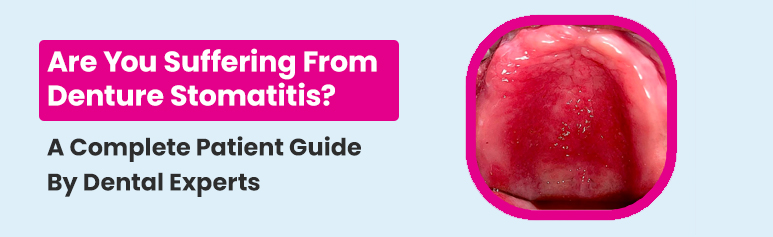
If the skin under your denture looks red, feels sore, or burns while eating, it can make daily life annoying. Many people ignore it because the pain is not always sharp, or they assume it is normal.
Denture stomatitis is common, treatable, and preventable when you fix the real trigger instead of only using short term gels.
This patient guide by Radiant Dental Care explains denture stomatitis symptoms, causes, and denture stomatitis treatment in a simple flow. If you are searching for an affordable dental clinic in Chennai, Radiant Dental Care can be a good choice because it offers dentist-led evaluation, hygiene focused care, and clear next steps across multiple Chennai locations.
1. Denture Stomatitis Explained In Simple Words
Denture stomatitis means inflammation of the soft tissue that sits under a denture. It most often shows up under an upper denture, on the palate. The area can look red, patchy, or swollen.
1.1 Why Does it Happens in Denture Wearers?
A denture covers your gum tissue for many hours. If the denture is loose, worn out, or not cleaned properly, the covered area becomes a warm and moist space where germs can build up. The tissue then stays irritated, and the inflammation becomes a repeating cycle.
2. Denture Stomatitis Symptom, You Should not Ignore
Denture Stomatitis Symptoms can start quietly, so it helps to know the early signs.
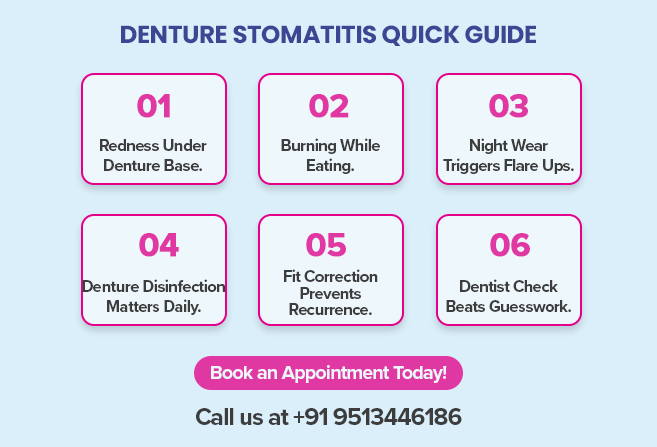
- Redness under the denture base
- Mild burning while eating spicy, hot, or acidic food
- Tenderness when you press the gum area
- A feeling of rawness or heat on the palate
2.1 Red Flags That Need a Quick Dental Visit
If you notice any of these, do not delay.
- Bleeding, open sores, or cracks that hurt while eating
- Pus, fever, or facial swelling
- Severe pain that makes you avoid wearing the denture
- A sudden change where the denture feels unbearable
If the pain is stopping you from eating, it is safer to get the mouth checked instead of trying random home remedies, search for a dental hospital near me.
3. Root Causes Behind Denture Stomatitis
Here’s the list of most common causes behind denture stomatitis.
3.1 Denture Fit Issues And Pressure Points
One of the most common denture stomatitis causes is a denture that no longer fits well.
- Loose dentures that rock while talking
- Uneven bite that creates rubbing in one area
- Sharp edges or worn denture base
- Old dentures that do not match the gum shape
Even a small pressure spot can keep the tissue inflamed if the denture is worn daily.
3.2 Wearing Dentures Overnight
Sleeping with dentures is a big trigger. Tissue needs air and recovery time. When a denture stays on all night, moisture and germ load increase. That is why many cases keep coming back even after temporary relief.
3.3 Denture Cleaning Gaps
Another major cause is hygiene gaps.
- Rinsing with water only, without proper brushing of the denture.
- Skipping denture soaking and disinfection.
- Not cleaning the gums, tongue, and palate.
- Using abrasive toothpaste that scratches the denture surface.
3.4 Fungal Overgrowth Risk
Denture stomatitis often has a fungal link, especially when the denture is not disinfected. If the denture surface keeps carrying the germ load, the mouth tissue keeps getting re-exposed even after medication.
3.5 Health And Lifestyle Risk Factors
These factors can increase the risk or slow healing.
- Diabetes
- Smoking
- Dry mouth due to medicines or dehydration
- Steroid inhalers without mouth rinsing after use
- Reduced immunity for any reason
This does not mean you cannot treat it. It simply means your plan may need closer follow up.
4. Dentist Confirmation and Diagnosis Checklist for Denture Stomatitis
Diagnosis is usually confirmed through a careful mouth and denture check. A dentist typically looks at:
- The exact location and shape of redness.
- Whether the tissue is swollen, tender, or ulcerated.
- Denture fit and stability while you speak and bite.
- Pressure spots and sharp edges.
- Denture base cleanliness and surface condition.
- Saliva levels and dryness signs.
4.1 When Extra Tests May Be Suggested?
Most cases do not need tests. Tests may be considered if:
- The condition keeps returning despite good hygiene and treatment.
- The tissue looks unusual or does not heal as expected.
- There are multiple mouth infections at the same time.
A reliable dental hospital in Chennai will not jump to one quick gel. The right diagnosis decides the right fix.
5. Treatment Roadmap Used By Dental Experts In Chennai
A strong denture stomatitis treatment plan works when it treats the mouth and the denture together. If you treat only the mouth, it comes back. If you clean only the denture but ignore fit, irritation continues.
| Step In Treatment Plan | Why It Matters |
| Tissue Recovery And Night Removal | Reduces constant irritation and moisture trapping. |
| Denture Cleaning And Disinfection | Removes the source of reinfection. |
| Medication If Required | Treats fungal or microbial involvement. |
| Denture Adjustment Or Relining | Fixes pressure points that keep inflammation active. |
| Follow Up Checks | Prevents recurrence and improves comfort long term. |
6. Dentist Selection Checklist In Chennai For Denture Stomatitis
If you are searching for a dental clinic in Chennai and a dental hospital in Chennai, focus on checks that actually improve outcomes.
6.1 Green Flags In Your First Visit
- The dentist checks denture fit, not only the redness.
- You get a clear explanation of the trigger in your case.
- You receive a written plan for treatment plus prevention.
- Follow up is discussed, not ignored.
6.2 Choosing With Local Intent In Mind
If you searched for the best dentist in Chennai check your convenience first, because treatment may need follow up. A clinic that is easy to reach improves consistency, and consistency improves results. Many patients also prefer an affordable dental clinic in Chennai, but affordability should still include correct diagnosis and long term prevention support.
Visit Radiant Dental Care For Best Denture Stomatitis Treatment
If your symptoms keep returning, it usually means the denture fit, cleaning method, or both need correction. Radiant Dental Care supports denture wearers with dentist led evaluation, denture fit checks, hygiene focused guidance, and a step by step plan designed to reduce recurrence.
If you are in Chennai and looking for the best dentist in Chennai that gives a clear plan, Radiant Dental Care can help you move from discomfort to a stable routine with proper follow up. Book an Appointment Today! Call: +91 9513446186
FAQs
Can denture stomatitis go away on its own?
Mild irritation can improve when you remove dentures at night and clean them properly, but true denture stomatitis often returns if the denture fit or infection source is not treated.
Is denture stomatitis contagious?
It is usually not contagious like a cold. It is more often linked to local conditions under the denture such as moisture trapping, irritation, and germ build up.
Can I keep wearing dentures during treatment?
Many patients can wear dentures for limited hours, but night removal is usually essential. Your dentist will guide you based on soreness and infection severity.
How long does denture stomatitis treatment take?
Relief can start within days, but full healing depends on severity, hygiene routine, and whether denture adjustment or relining is needed.
Does diabetes increase denture stomatitis risk?
Yes, diabetes can raise infection risk and slow healing, so treatment and follow up need to be more consistent.
Categories:
- Braces
- Cavity
- Crossbite
- Dental Bridge
- dental care
- Dental Clinic
- Dental Crown
- dental health
- Dental Implants
- Home dentist
- invisalign
- Mamelons
- News
- pediatric dentist
- Root Canal Treatment
- Smile Makeover
- Teeth Aligners
- teeth alignment
- teeth cleaning
- teeth whitening treatment
- tooth extraction
- Tooth Hypersensitivity
- Uncategorized
Trending Posts
 +91 9513446186