Supernumerary Teeth – Symptoms, Causes, Treatment

FACT CHECKED
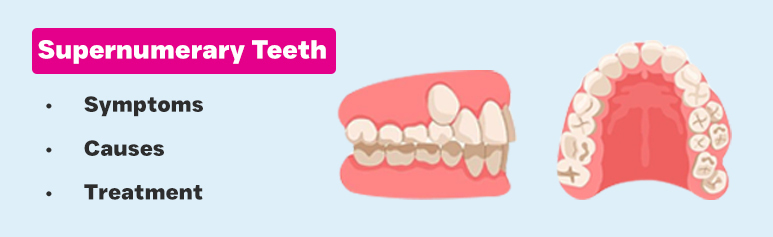
Extra teeth medically known as supernumerary teeth can affect the natural alignment of your smile, delay the eruption of permanent teeth, or even lead to cyst formation. Because these extra teeth often stay hidden beneath the gums, many people don’t notice them until they start causing problems. That’s why early recognition of symptoms is essential to avoid complications like crowding, bite issues, discomfort, and other dental concerns.
At Radiant Dental Care, the best dental hospital in Chennai, our specialists are experienced in detecting and treating supernumerary teeth with accuracy and care. In this guide, we’ll help you understand the symptoms, causes, and treatment options so you can make confident, informed decisions about your oral health.
What Are Supernumerary Teeth, Their Types, and How They Affect Your Smile?
Supernumerary teeth are extra teeth that grow in addition to your normal set. A typical person has 20 primary teeth and 32 permanent teeth, and any tooth that appears beyond these numbers is considered supernumerary. These additional teeth can vary in shape, size, and position, which is why they are classified into different types.
Types of Supernumerary Teeth Based on Shape and Position
Supernumerary teeth can be grouped in two primary ways by their shape and by their location in the mouth:
By Shape:
- Conical: Small, pointed teeth that commonly appear in the upper jaw.
- Tuberculate: Barrel-shaped teeth with multiple cusps.
- Supplemental: Extra teeth that closely resemble normal teeth.
- Odontoma: Irregular clusters of dental tissue that may appear as tooth-like masses.
By Position:
- Mesiodens: Extra teeth found between the two upper front teeth.
- Paramolar: Additional teeth located near the molars.
- Distomolar: Extra teeth positioned behind the third molars (wisdom teeth).
- Peridens: Teeth that appear anywhere along the dental arch.
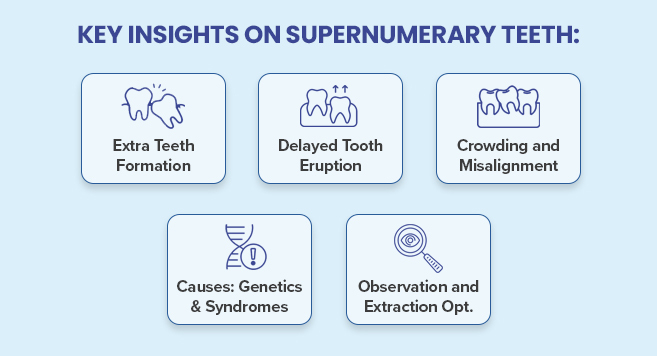
Left untreated, these extra teeth may lead to several issues such as crowding, delayed eruption of permanent teeth, bite problems, or even cyst formation. Understanding their shape and position helps dentists determine the most effective treatment plan and prevent long-term complications.
Supernumerary Teeth Symptoms You Should Not Ignore
Early detection of supernumerary teeth symptoms helps prevent complications. Watch for the following signs:
- Delayed eruption of permanent teeth: Extra teeth may block the natural path of normal teeth.
- Crowding or misalignment: Extra teeth can push other teeth out of place.
- Visible extra teeth: Some may be noticeable in the dental arch.
- Difficulty chewing or biting: Misaligned teeth can interfere with normal chewing.
- Pain or discomfort: Impacted or erupting extra teeth may cause tenderness.
- Formation of cysts: Rarely and extra teeth can lead to cysts or other abnormal growths.
Routine dental check-ups can detect these signs early enabling timely treatment and reducing the risk of future problems.
Common Supernumerary Teeth Causes Explained
Understanding supernumerary teeth causes can help in early detection and proper treatment. Common causes include
1. Genetic Factors
Extra teeth may run in families. If a family member has supernumerary teeth others may be more likely to develop them.
2. Developmental Disturbances
Abnormalities during tooth development particularly in the dental lamina can trigger the formation of additional teeth.
3. Syndromes and Medical Conditions
Supernumerary teeth can appear alongside certain conditions, including:
- Cleidocranial Dysplasia: Affects bone and teeth development.
- Gardner’s Syndrome: Causes multiple growths in the body.
- Cleft Lip and Palate: Extra teeth may develop near affected areas.
Environmental Factors:
Trauma, infections or disturbances during early tooth formation can contribute to the growth of extra teeth.
Problems Caused by Supernumerary Teeth and Their Risks
If left untreated then supernumerary teeth can result in:
- Crowding and misalignment of teeth.
- Delayed eruption of permanent teeth.
- Impacted teeth causing pain or swelling.
- Cyst formation around impacted teeth.
- Damage to adjacent teeth.
Early diagnosis and professional care minimize these risks and help maintain long-term oral health.
How the Best Dentist in Chennai Diagnoses Supernumerary Teeth?
Identification of extra teeth requires different stages:
- Inspection by eye: Identifies the teeth that are visible.
- X-ray of the Teeth: Unveils the hidden or impacted teeth.
- Three-dimensional Picture (CBCT): Gives exact planning for the hard cases.
- Dental Evaluation: Judges the bite and the alignment problems.
Going to the top dental hospital in Chennai is the safest way to get a correct diagnosis and a treatment plan that is unique for every patient.
Supernumerary Teeth Treatment Options From Observation to Extraction
Supernumerary treatment depends on the type, location and impact of the extra teeth. Common approaches include:
Observation
If the extra teeth do not cause problems then dentists may monitor them through regular check-ups.
Extraction
Surgical removal is recommended when extra teeth:
- Cause crowding or misalignment.
- Block permanent teeth from erupting.
- Lead to discomfort or cyst formation.
Extraction is often followed by orthodontic treatment to restore proper alignment.
Orthodontic Management
Braces or clear aligners may be recommended after extraction to correct misalignment and ensure long-term dental stability.
Post-Treatment Care for Supernumerary Teeth for Faster Recovery
Appropriate care after the procedure will guarantee healing and will keep the occurrence of any complications at bay:
- Brush softly so as not to irritate the wound but still to keep good hygiene.
- Apply the given mouthwash for prevention of infection.
- Do not eat any hard or sticky food right after the removal of the tooth.
- Make follow-up appointments to see the progress of the healing.
At Radiant Dental Care, care plans are tailored to each patient to provide ease, quick recovery and overall oral health.
Fix Supernumerary Teeth with Trusted Expert Care: Book Your Appointment Today!
Supernumerary teeth (extra teeth) can quietly disrupt your oral health long before you notice a problem. They may push other teeth out of alignment, delay the eruption of permanent teeth, or even contribute to cyst formation. Because these teeth often stay hidden beneath the gums, early detection becomes essential to avoid future complications such as crowding, bite issues, and persistent discomfort.
At Radiant Dental Care, widely trusted as the best dental hospital in Chennai, our specialists use advanced diagnostics to spot these hidden teeth early and treat them with precision. Whether it’s identifying symptoms, understanding the root cause, or choosing the safest removal and alignment options our team ensures you’re guided clearly at every step.
If you’ve noticed delayed tooth eruption, unexplained spacing, crowding, or discomfort, it might be time to get your smile evaluated by experts.
Your smile health should never be left to guesswork get expert guidance today.
Explore Radiant Dental Care: https://radiantdentalcare.in/ or Call Us: +91 9513446186.
Frequently Asked Questions:
- What are the common symptoms of supernumerary teeth?
Ans. Common symptoms of supernumerary teeth include delayed eruption of permanent teeth, visible extra teeth, crowding or misalignment, difficulty in chewing, pain or discomfort, and in rare cases, cysts around the impacted tooth. Regular dental check-ups help detect these signs early so timely treatment can be planned.
- What leads to the development of supernumerary teeth?
Ans. The main causes of supernumerary teeth include genetic factors, developmental disturbances during tooth formation, certain syndromes such as Cleidocranial Dysplasia or Gardner’s Syndrome, and environmental factors like dental trauma or infection during early childhood.
- How are supernumerary teeth diagnosed?
Ans. Dentists diagnose supernumerary teeth through a combination of visual examination, dental X-rays, and in complex cases, advanced 3D imaging (CBCT). Orthodontic evaluations are also done to understand how the extra tooth affects bite, spacing, and alignment, ensuring a precise treatment plan.
- What are the treatment options for supernumerary teeth?
Ans. Treatment depends on the type, location, and impact of the extra tooth. Options include monitoring asymptomatic teeth, surgical removal of teeth causing crowding or discomfort, and orthodontic treatment to correct alignment after extraction. Proper post-treatment care helps maintain long-term dental health.
Categories:
- Braces
- Cavity
- Crossbite
- Dental Bridge
- dental care
- Dental Clinic
- Dental Crown
- dental health
- Dental Implants
- Franchise
- Home dentist
- invisalign
- Mamelons
- News
- pediatric dentist
- Root Canal Treatment
- Smile Makeover
- Teeth Aligners
- teeth alignment
- teeth cleaning
- teeth whitening treatment
- tooth extraction
- Tooth Hypersensitivity
- Uncategorized
Trending Posts
 +91 9513446186